Best Dive Sites in Pemba Island

Explore the untouched underwater world of Pemba Island | Reef Guide
— Special thanks to our PADI Instructor, Mohamed from Pemba Island, whose invaluable local expertise contributed to this guide —
Top Dive Locations
Browse our collection of hand-picked reef profiles below and explore this remote dive paradise with our locally-owned PADI Dive Resort on Pemba Island.

Explore Pemba Dive Spots
Swiss Reef East | Swiss Reef West | Shimba Hills | Shimba Wall | The Edge | Pole Pole Mountain
Njao Coral Garden | Njao Gap North Wall | Njao Gap South Wall | Slip Stream | Aquarium | Jahazi Reef | Mandela Wall
Fundo Coral Garden | The Crack | The Pinnacle | Fundo Deep Freeze | Fundo Gap South Wall
Uvinje Gap North Wall | Uvinje Gap South Wall | Misali Island
Swiss Reef East
Depth 8-20 meters
Swiss Reef East is a dynamic drift dive site for experienced divers seeking an exhilarating underwater adventure. Prepare to be swept away by strong currents as you navigate through vibrant coral formations teeming with life. The reef features a series of coral mountains descending from 8 to 20 meters. This site is renowned for its large schools of sweetlips, impressive barrel sponges, sightings of green sea turtles, and more.
Swiss Reef West
Depth 12-25 meters
An exhilarating drift dive for experienced divers, Swiss Reef West features a prominent coral mountain descending from 12 meters, running parallel to a significant wall on a platform 25 meters deep. Powerful currents are a hallmark of this site which offers the chance to encounter large pelagic species.
Shimba Hills
Depth 12-22 meters
Shimba Hills is a beginner-friendly dive site featuring gently sloping coral hills that descend from 12 to 22 meters. With less currents—especially during certain moon phases—and vibrant marine life, including schools of sweetlips and fusiliers, green turtles, red tooth triggerfish, a lot of garden eels, and much more, it’s a must-visit for its vibrant marine life and calm waters.
Shimba Wall
Depth 6-24 meters
Shimba Wall is a gently sloping wall that descends from 6 to 24 meters. A good spot for divers of all levels from beginner to advanced, typically featuring less current—especially during certain moon phases. A great dive site to observe a diverse range of macro marine life including nudibranchs and leaffish, reef fish, lionfish, scorpionfish, porcupinefish, pufferfish, clouded moray eels, redtooth triggerfish, glassfish, cornetfish, and many more. Recommended to underwater photographers.
The Edge
Depth 30-50 meters
The Edge is a prominent wall dive in northwestern Pemba Island, where the seabed dramatically drops into the depths of the Pemba Channel. Expect a steep descent from 30 to depths exceeding 50 meters and strong currents. The upper reef is a vibrant spectacle featuring towering giant barrel sponges, spiral corals, and large gorgonian sea fans reaching up to two meters. Divers may have the opportunity to encounter big fish, such as Napoleon wrasse, white-tip reef sharks, and other pelagic species. Recommended for experienced divers with deep diving certifications only.
Pole Pole Mountain
Depth 15-30 meters
Pole Pole Mountain is a towering coral formation rising from the main reef, a striking spectacle that ascends from a depth of 30 meters at its base to a top at 15 meters. This is a challenging dive only suitable for experienced Advanced Open Water divers. It should be explored during slack or neap tides for the most favorable conditions. The site is known for its large schools of spotted sweetlips, vibrant nudibranchs, and occasional sightings of the whitetip reef shark.
Njao Coral Garden
Depth 6-12 meters
A true haven for coral lovers, Njao Coral Garden is a unique and special dive site. The flat reef, which undulates between 6 and 12 meters, is home to a spectacular variety of both soft and hard corals. It is a fantastic spot for macro life, with plenty of nudibranchs and schools of fusiliers to see.
Njao Gap North Wall
Depth 6-40 meters
For deep-diving enthusiasts, Njao Gap North Wall is a prime destination. This site features a dramatic drop-off, starting at 6 meters and plunging to depths of more than 40 meters. The sheer wall offers a thrilling experience for those with deep diving certifications. This site is renowned for sightings of white tip reef sharks and Napoleon wrasse, among others.
Njao Gap South Wall
Depth 8-40 meters
Njao Gap South Wall offers a unique experience perfect for both divers and snorkelers. The top of the wall is a shallow part at 8 meters, full of micro life, including nudibranchs, soft and hard corals, and even green sea turtles. The wall then drops to over 40 meters, eaturing massive overhangs blanketed with giant gorgonian sea fans, making it the best spot for spotting large pelagic species.
Slip Stream
Depth 9-20 / 9-40 meters
Slip Stream is a captivating dive site with a unique landscape. This coral mountain has its top at a comfortable 9 meters, with two distinct sides. The west side is a steep drop-off to 40 meters, while the east side is a gentle slope down to 20 meters. Keep an eye out for green sea turtles, white-tip reef sharks, and large schools of barracudas.
Aquarium
Depth 5-18 meters
The Aquarium is a beginner-friendly dive site with a gentle slope from 5 to 18 meters, featuring a beautiful garden of leafy crater and disc corals that create concentric terraces. Known for its clear visibility and minimal current, it offers a haven for macro photographers. Divers can expect to find a rich variety of marine life, including lionfish, scorpionfish, frogfish, nudibranchs, and schools of vibrant reef fish.
Jahazi Reef
Depth 6-18 meters
Resembling a wooden dhow, Jahazi Reef is an isolated site with exceptionally clear water, ranging from 6 to 18 meters deep. Look for schools of sweetlips and other pelagic fish, as well as a great abundance of macro life such as colorful nudibranchs and other small invertebrates. A great spot for divers of all levels seeking excellent visibility and a wide range of biodiversity. At the top of this site, a remarkable pinnacle bursts with life, nearly reaching the surface. It is the perfect spot to end your dive, surrounded by a vibrant, bustling ecosystem.
Mandela Wall
Depth 6-22 meters
Mandela Wall is an excellent site for divers of all experience levels, particularly well-suited for novices. It features a gentle sloping wall that begins at a comfortable 6 meters and descends to a maximum depth of 22 meters. The wall is a vibrant habitat for a wide array of fascinating marine life and especially known for its rich macro life. Divers can spend their time closely observing a bounty of colorful nudibranchs, small crabs, shrimp, and other intricate invertebrates that thrive on the wall’s surface.
Fundo Coral Garden
Depth 4-18 meters
Fundo Coral Garden is among the best dive sites for beginners, offering a beautiful and accessible underwater landscape. The site begins in the shallows at a depth of 4 meters and slopes down to a maximum of 18 meters. Vibrant soft and hard corals create a stunning and colorful backdrop for your dive. The site is a macro photographer’s dream, with a rich variety of macro marine life. Be sure to look closely for the numerous nudibranchs and other small, fascinating creatures that inhabit the reef.
The Crack
Depth 40 meters
The Crack is a thrilling dive site for experienced divers. The main feature is a series of two large fissures in the reef wall that you can enter and explore. Be prepared, as the space inside gets quite narrow and strong currents are present. The wall itself drops to a depth of 40 meters and is covered with a variety of vibrant sponges. This is a great site to spot big groupers, napoleon wrasses, snappers, barracudas, batfish, white‑tip reef sharks, and other pelagic species swimming in the deep blue. With its unique topography and potential for encounters with larger fish, The Crack offers a truly exciting and memorable dive—some of our divers say this was the best dive of their life.
The Pinnacle
Depth 9-40 meters
The Pinnacle is a spectacular coral mountain located deep within the channel. Its peak is at 9 meters, descending to depths of more than 40 meters. This site is a prime location for advanced divers, offering the chance to encounter magnificent marine life, including manta rays, hammerhead sharks, and blacktip reef sharks.
Fundo Deep Freeze
Depth 9-45 meters
Known for its consistently cold water, Fundo Deep Freeze is a fantastic dive site for advanced divers. The wall begins at 9 meters and drops down to 45 meters, offering a chance to see schools of barracudas hunting, as well as large pelagic species.
Fundo Gap South Wall
Depth 7-40 meters
Fundo Gap South Wall is an exhilarating wall dive that begins at 7 meters and drops down to depths of more than 40 meters. Known for its consistent currents, this site is always a thrilling drift dive. Divers here have a chance to spot whitetip reef sharks, napoleon wrasses, giant groupers, and larger pelagic species.
Uvinje Gap North Wall
Depth 4-46 meters
Uvinje Gap North Wall is an exhilarating wall dive that begins at a shallow 4 meters and plunges to a bottom of 46 meters. Known for its very strong currents, this site always offers a thrilling drift dive. Here, you can expect to see beautiful corals, nudibranchs, and schools of barracudas, among other marine life.
Uvinje Gap South Wall
Depth 6-40 meters
Uvinje Gap South Wall is a spectacular wall dive that begins at a shallow 6 meters and drops down to depths of more than 40 meters. Best suited for advanced divers, this site offers an exciting chance to encounter large pelagic species.
Misali Island
Misali Island, located to the south of Pemba’s main island, is a beautifully pristine marine protected area that is well-suited for both divers and snorkelers of all levels. This sanctuary is home to a variety of incredible sites, including Mapinduzi Reef, Coral Garden, Wowowo Reef, Fungu Pacha, and Kijiji Reef, where you can explore a bustling ecosystem teeming with life.
Pemba Dive & Stay
The reefs along Pemba’s northwest coast—including Swiss Reef, Shimba Wall, Njao Gap and Fundo Gap—are considered the secret dive gem of the Zanzibar Archipelago.
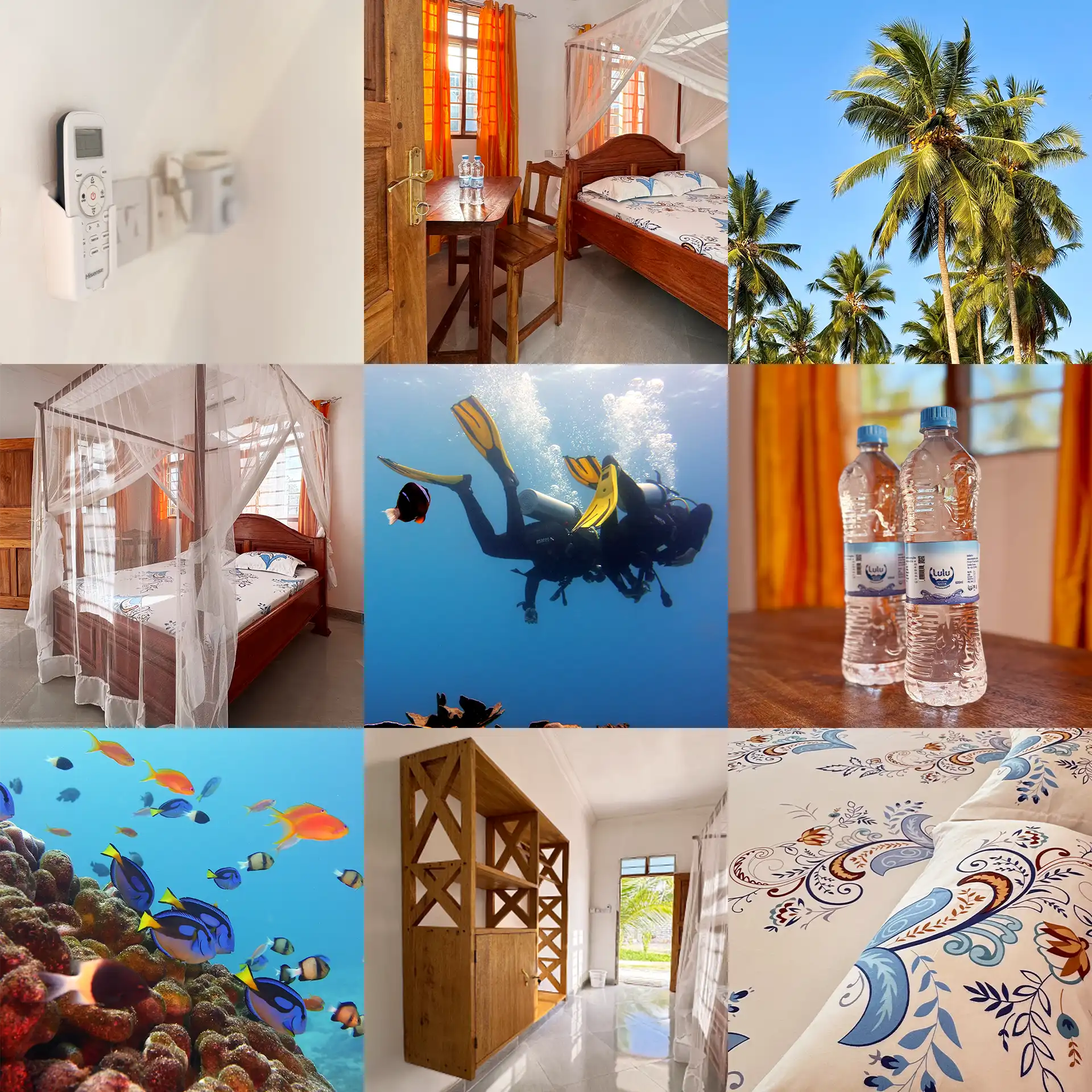
Explore this remote paradise with Fun Divers Zanzibar. Our locally-owned PADI Dive Resort provides the perfect base for your authentic Pemba dive holiday.
Frequently asked questions about diving in Pemba Island
When is the best time to dive in Pemba?
Pemba offers fantastic diving year-round with warm Indian Ocean water temperatures consistently between 25°C and 29°C. For the absolute best visibility—often exceeding 30 meters—and the calmest surface conditions, the dry periods spanning August to October and January through mid‑March are highly recommended.
What marine life will I see in the Pemba Channel?
The untouched reefs of Pemba support a massive diversity of life. Along the steep walls and underwater mountains, you can regularly spot large pelagic species such as giant trevally, dogtooth tuna, barracuda, and green sea turtles. On the reefs themselves, the healthy barrel sponges and gorgonian sea fans hide an incredible array of macro life, including colorful nudibranchs, leaf scorpionfish, and giant frogfish. Please refer to our Pemba Reef Guide for detailed reef profiles, depths & marine life.
